Friday, May 15, 2009
Good Bye
It has been fun creating this blog... but now I must go to high school. I will sadly not be continuing this blog. I hope you all a happy summer and many good years. Please don't forget to be nice to your friends because life without friends is no life at all.

Earth's Waters

Earth's waters is the most recent topic we have studied. I really enjoyed the part when we learned about how our water comes to us. I liked all of the steps that the water went through. That has always been a misery to me. Also when we learned about the river system it was interesting to hear that big rivers can be tributaries other larger rivers.
Weathering and Erosion
 Weathering and Erosion was a fun unit. I really liked learning about earthquakes and how they occur by faults and compression. Also learning about volcanoes was fun to. I liked learning about what volcanoes are more dangerous than others and the factors that go with that like the hotter the lava the faster the flow. I also liked learning about mechanical and chemical weathering and how I can just go outside and look carefully and some of both.
Thursday, May 14, 2009
Geology
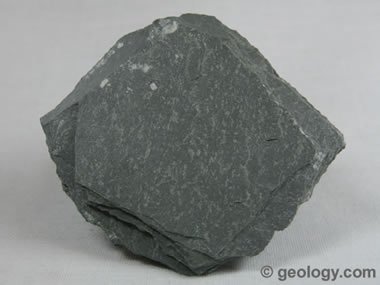
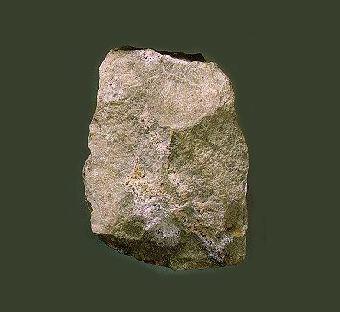

I really thought geology was an interesting topic to learn about. I liked learning about sea floor spreading and how it made different ridges. It was interesting learning about subduction and how the ground is turned into plasma. Metamorphic, igneous, and sedimentary rocks were also a fun topic. I liked trying to find out which one was which in class. I also really liked learning about how scientists tell how they are different by the hardness scale, streak and color, density, and mineral formation.
Friday, May 8, 2009
Weather and Climate (Earth's Atmosphere)

I really liked learning about the atmosphere and it is amazing how much I learned about it. Like there is 5 layers, the biosphere is were all of the life forms live, and the stratosphere is where the weather is at. I also learned a lot about meteorites since the earth has an atmosphere most of the meteorites will burn up in the atmosphere, but some meteorites hit the earth's surface the weather will then fill in the crater it made. Since the moon doesn't have an atmosphere when the meteorites hit the moon it will create a big crater.
Astronomy
 Earlier this year we learned about astronomy, my favorite project was probably the Google docs power point presentation project for a few reasons. First we got to pick our partners, which made it nice because we didn't get stuck with someone we didn't like. Second we got to pick our topics. That was fun because it made me feel like we had some freedom and that our teacher trusted us to make the right decision. Lastly I liked posting it to my blog so that I can go back and look at it and see how far I have progressed in writing, blogging, and Google docs. I also really learned a lot about the stars and its size, temperature, brightness, composition, and the color.
Wednesday, April 22, 2009
Water Cycle
- What is the water cycle? The water cycle is a cycle that water moves continuously from earth's surface to earth's atmosphere.
- Does the water cycle have a beginning or end? The water cycle does not have a beginning nor an end because the water is always getting evaporated and condensed the it turns to precipitation.
- Starting with a puddle on a sunny day, describe how water might move through the water cycle and eventually fall back as rain. From the puddle the water would probably be evaporated into the atmosphere. There it will be condensed and turned into precipitation. Then it rains and starts over.
Tuesday, April 21, 2009
Monday, April 13, 2009
Water Peny Lab
The steps to the procedure is you first make a prediction of how many drops you think the penny will hold. Then you get a penny, glass of water, and an medicine dropper. Put the penny on a flat surface and use the medicine dropper to put drops on the penny. My prediction was 15 drops of water. But I was surprised to find out that the penny can hold alot more. I think this is because there can be different sizes of drops that you put on the penny. The larger the drop the fewer you could get on the penny. The smaller the drop the more you can get on the penny. Also maybe if you held you dropper closer to the penny you can get more on the penny.
Tuesday, March 31, 2009
Everglades

The Everglades are located at the bottom end of Florida. It is the home of many creatures including crocodiles, fish, and more. The Everglades water comes from Lake Okeechobee, the water then leads into the ocean. The water level of the Everglades is not very high. The deepest the water will get is only a couple of meters deep. The flow of the water is not very fast, so when fish and plants die they don't get washed away they decompose there in the Everglades. This causes rich soil and good hiding places for some fish and or crocodiles. Florida has a lot of tourists that drink a lot of water causing the water level to go down. People are currently trying to find a way to stop this from happening. Florida's Everglades are in danger and so are its living creatures.
Picture by: Nicholas M. Short
Thursday, March 19, 2009
Thursday, January 22, 2009
Earthquake webquest.
1) Most types of earthquakes tend to happen around the boundaries of the plate tectonics. Geographically earthquakes happen around, the North American Plate, Eurasian Plate, and the Indo - Australian Plate.
2) I think most earthquakes occur mostly there because, in the middle of the plate there is nothing to rub against.
3) The area where the most earthquakes occur is called "The Ring Of Fire"
4) The earthquake closest to Manitou Springs is the M2.8 in New Mexico. Some details of the earthquake are: 5 km (3.1 miles) deep, it was located 36.287°N, 106.475°W. I think people wouldn't be able to feel the earthquake because the earthquake has to be above 3.5 to be felt. 1.8 more magnitude would be needed for the 1 magnitude to be equivalent to the 2.8 magnitude. Also the energy greatest with the earthquake is 1.8.

5) The earthquake I chose has a magnitude of 5.1. Located at 0.495°N, 121.032°E or Minahasa, Sulawesi, Indonesia region. The depth of the earthquake is 78 km or 48.5 miles deep. Earthquakes are common in the area.
6) People can protect themselves from earthquakes by live in a sturdy shelter and have perishable foods in the house. Some good items to have at the house are large plastic trash bags for waste, tarps and rain ponchos, bar soap and liquid detergent, shampoo, toothpaste and toothbrushes, feminine hygiene supplies, toilet paper, and household bleach. It would be a good idea not to live in the ring of fire.
2) I think most earthquakes occur mostly there because, in the middle of the plate there is nothing to rub against.
3) The area where the most earthquakes occur is called "The Ring Of Fire"
4) The earthquake closest to Manitou Springs is the M2.8 in New Mexico. Some details of the earthquake are: 5 km (3.1 miles) deep, it was located 36.287°N, 106.475°W. I think people wouldn't be able to feel the earthquake because the earthquake has to be above 3.5 to be felt. 1.8 more magnitude would be needed for the 1 magnitude to be equivalent to the 2.8 magnitude. Also the energy greatest with the earthquake is 1.8.

5) The earthquake I chose has a magnitude of 5.1. Located at 0.495°N, 121.032°E or Minahasa, Sulawesi, Indonesia region. The depth of the earthquake is 78 km or 48.5 miles deep. Earthquakes are common in the area.
6) People can protect themselves from earthquakes by live in a sturdy shelter and have perishable foods in the house. Some good items to have at the house are large plastic trash bags for waste, tarps and rain ponchos, bar soap and liquid detergent, shampoo, toothpaste and toothbrushes, feminine hygiene supplies, toilet paper, and household bleach. It would be a good idea not to live in the ring of fire.
Subscribe to:
Posts (Atom)

